


Solar + Battery Energy Storage in Arizona
Desert Rainbow Solar + Storage
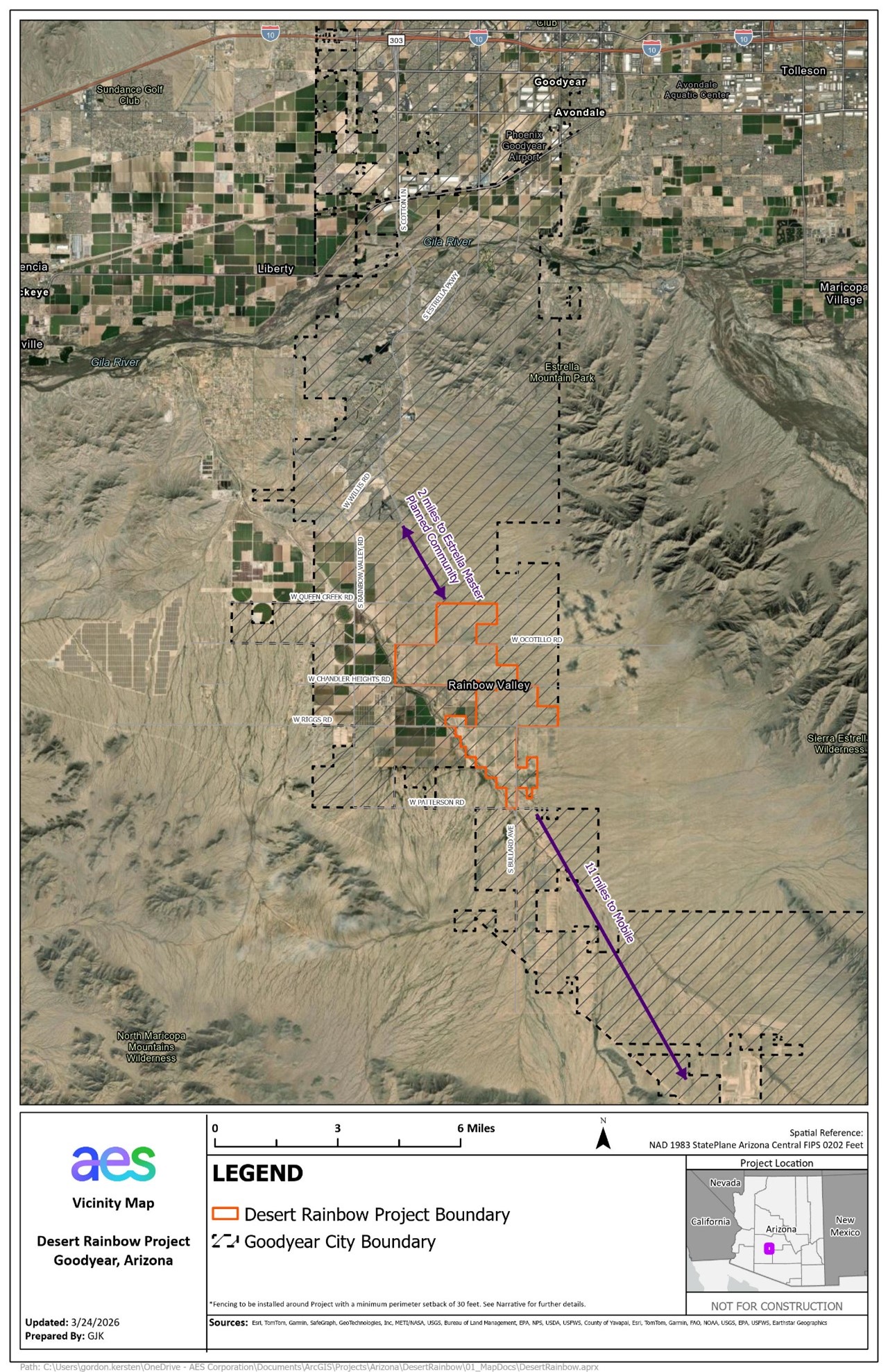
The Desert Rainbow project is a planned solar and battery energy storage facility in Goodyear, Arizona. The project will help meet growing power demand in the region while providing benefits to the local community. As a company dedicated to developing and delivering innovative energy solutions with long-term impact, our projects help to build a secure and sustainable energy future.


Approximately 550 MW solar + 550 MW battery energy storage capacity

Enough clean energy to power the equivalent of 165,000 homes annually

Located in
Goodyear, Arizona
Our clean energy commitment
We believe in being a good neighbor, ensuring responsible clean energy development that creates long-term value and positive impact for both the environment and local communities without burdening existing infrastructure.

Economic and environmental benefits
The project is expected to generate substantial economic and environmental benefits for local communities and the region.
1.37 Million MWh
Carbon-free electricity generated each year
$200+ million
Expected to be generated in tax revenue for the City of Goodyear, Maricopa County, Arizona, and local school districts over the life of the project
360+ Jobs
Expected to be created during peak construction, plus an estimated 20 long-term operations and maintenance jobs
Project details
- Located on approximately 5,000 acres of privately owned, vacant land
- Power generated by the solar panels can be stored in the battery energy storage system and deployed quickly to the electric grid, providing flexibility and resiliency
- The project will use advanced safety features and adhere to all safety standards for battery energy storage systems
- The project will preserve Waterman Wash and special flood hazard areas to support wildlife habitat protection and trail system development by the City of Goodyear Parks & Recreation Department
- AES will be the long-term owner and operator of the facility
- At the end of the project's 40-year life, we will follow a decommissioning plan to decommission the project and then restore the land to the same general condition that existed prior to development.

Expected project timeline

2023-2029
Development and permitting

2029-2032
Construction

2032+
Operations
How clean energy benefits local communities

Long-term tax revenue to counties, towns and school districts

Job creation during construction

Local economic stimulus during construction

Affordable, reliable, locally produced clean energy
Project updates
Partnering with communities for the future of clean energy
At AES, we understand that our success as a company is only as strong as our partnerships with the communities where we operate. That’s why we partner with communities, customers, state agencies, higher education, elected officials, and other key stakeholders to see how we can best work together to support sustainable social and economic development.
Local partnerships:
- University of Arizona
- American Heart Association - CycleNation Phoenix
AES is a proud member and partner of:
- West Valley Regional Chamber of Commerce
- Greater Phoenix Economic Council
- Arizona Chamber of Commerce & Industry
- Peoria Chamber of Commerce

Additional information
Safety and sustainability best practices
At AES, safety is our highest priority, and we’ve focused on improving lives for more than 40 years. As a leading innovator in energy solutions, sustainability is core to both our strategy and our culture. We are committed to responsible land use and incorporating sustainable best practices into the entire project lifecycle to build a more resilient future.
Environmental and technical studies
We conduct a series of studies that ensure our projects are thoughtfully and responsibly designed, including but not limited to:
- Cultural & Historical Resources
- Geotechnical
- Topographical
- Wetlands
- Species and Habitat
- Floodplains
- Hydrological
Contact us
We appreciate your interest in AES’ Desert Rainbow.
Please contact us using the information below.