


Partnering with landowners and communities

Landowner partnership and benefits
When landowners choose to work with AES, they enter a long-term partnership built on trust, collaboration, and the shared success. Our projects would not be possible without the support of our landowners and we are committed to delivering meaningful benefits throughout the life of the project. We work with both landowners and communities to expand the positive impact and economic benefits of our clean energy projects.

New source of revenue
Our rent payments to landowners provide a competitive and reliable source of long-term income, mitigating the volatility of farming economics. You will receive reliable annual rent payments for the project's life (typically 20+ years), including any increased property tax payments and roll-back taxes.

Upfront payments during property assessment
We financially compensate you as we actively conduct an analysis of your property and advance the development of the project, during which, you can continue using the land as you do today.

Long-term reliable payments, without work on your end
You receive a check while our team handles the maintenance and management of your land used to host the project.

Land preserved for generations
At the end of the project’s life, we restore your land to allow a return to farming or other uses consistent with land-use policies at the time.
A bond is placed in service for every project ensuring that each project is responsibly decommissioned.

Support more reliable and affordable energy in your local community
Committed landowner partners are a key part of determining if a new energy project can be built in the area. Our projects are a safe and quiet neighbor, and we are committed to responsibly designing our projects to live in harmony with the existing character of the local community and the project's environmental surroundings.

Partner with a long-term owner operator
AES is a long-term owner-operator, so you will work directly with our team throughout your lease period. We are a good neighbor invested in the long-term success of your project and the health of your land.
Land lease process
Planning and engagement
AES works closely with landowners and communities to responsibly plan projects that align with local needs and support future energy infrastructure.
Development and construction
Throughout development and construction, landowners receive regular communication and support as projects move through key milestones.
Operations and legacy
After construction, AES remains a long-term partner, operating the facility, maintaining the land, providing reliable payments, and eventually restoring the property to farming or other uses consistent with land-use policies at the time at the end of the project's operating life.
Innovative dual-use clean energy projects, developed together with landowners
AES is on the cutting edge in developing innovative, dual-use projects – co-locating energy with another agricultural or land use – to increase the environmental, economic and social benefits of responsible energy development. Learn more about our commitment to sustainability and the benefits of agrivoltaics for farmers.


Agrivoltaics at Grafton solar project
The Grafton solar project piloted the incorporation of solar energy and agricultural production on the same parcel of land, with crops and livestock underneath and between the rows of solar panels. We work with the DOE Solar Energy Technologies Office (SETO) and UMass-Amherst to utilize a part of the project as a research site to learn more about the benefits of agrivoltaics and demonstrate how dual-use solar can provide clean power and share space with crops.
Learn more about the Grafton solar project.

Cattle ranching at Chevelon Butte wind farm
The Chevelon Butte wind project is located on private and state land on one of the oldest active cattle ranches in Arizona, further enabling the landowner family and Arizona State Land Department to continue raising livestock and stewarding the land for years to come.
Learn more about the Chevelon Butte wind project.

Enriching soils at Great Cove solar project
We are partnering with our customer the University of Pennsylvania and using part of the project as a research site for soil testing to learn more about how these projects capture carbon in the ground and enhance the land.
Low-impact construction that follows the natural contours of the landscape is critical to preserving the land. In most agricultural settings, we plant a native and nutrient rich ground seed cover mix to aid in enhancing the soil quality throughout the life of the project.

Native pollinators at Elizabethtown solar project
We installed a native pollinator-friendly ground cover seed mix that blooms for a significant part of the year to provide habitat for native pollinators, such as bumblebees and butterflies, at our 2 MW Elizabethtown solar project in Pennsylvania. A single honeybee will forage 2-5 miles in each direction, which allows this project to promote 20-100 square miles of pollinator health in a dense farmland region of Pennsylvania.

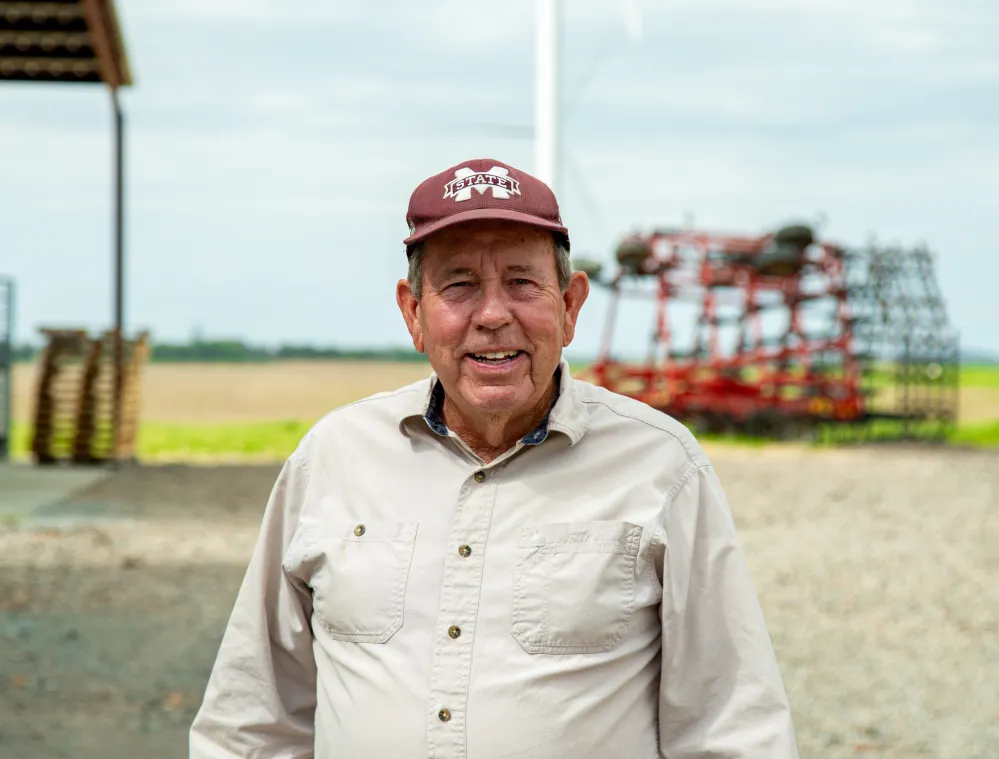
Built on trusted relationships
Our team and landowners work together, in partnership, from the early stages of site discussions, through permitting, construction, and operation. The landowner relationship with AES is built on trust and open communication, ensuring our projects create a long-lasting, positive impact for our landowners and local communities.

Responsible use of the land
As your tenant, we are responsible stewards of the land. Our projects are designed to fit within, and benefit local ecosystems, providing positive environmental benefits in addition to clean energy production. At the end of a project’s operating life a decommissioning plan ensures that the land can be sensitively restored to allow a return to land uses consistent with policies at the time. Ultimately, AES seeks to return your property to you in the same or better condition as when you entrusted your land to us.

Comprehensive community benefits
At AES, we understand that our success as a company is only as strong as our partnerships with the communities where we operate. That’s why we partner with communities, customers, state agencies, higher education and elected officials to see how we can best work together to support sustainable social and economic development that complements the local geography and unique culture.

FAQs
What Does It Mean to Lease or Sell Your Land to AES?
AES works with landowners through either land lease agreements or land purchases, depending on the needs of a specific project. Both options allow AES to evaluate, develop, construct, and operate energy infrastructure while providing landowners with compensation for the use or acquisition of their property.
If AES is interested in your land, the process typically begins with conversations about the property's characteristics, project suitability, and your goals as a landowner. If there is mutual interest, AES may enter into an agreement that allows the company to further evaluate the property and advance project planning.
Leasing your land allows you to retain ownership of your property while granting AES the right to use a portion of the land for a renewable energy, energy storage, transmission, or powered land project. Lease agreements generally provide long-term payments and establish how the property can be used throughout the life of the project.
Selling your land involves transferring ownership of all or a portion of the property to AES through a negotiated purchase agreement. This option may be appropriate when a project requires land ownership or when a landowner prefers a one-time transaction rather than a long-term lease relationship.
Whether you choose to lease or sell, AES is committed to keeping landowners informed throughout the project lifecycle, from initial evaluation and development through construction, operations, and eventual project closure or repowering. Our goal is to build long-term relationships based on transparency, communication, and responsible land stewardship.
Can you tell me more about AES?
The AES Corporation is a Fortune 500 global energy company accelerating the future of energy. Together with our many stakeholders, we're improving lives by delivering the greener, smarter energy solutions the world needs. Our diverse workforce is committed to continuous innovation and operational excellence, while partnering with our customers on their strategic energy transitions and continuing to meet their energy needs today. For more information, visit www.aes.com.
What happens after I sign a land lease with AES?
Signing an agreement is just the beginning of a long-term partnership. Depending on the project’s stage of development, AES may conduct environmental studies, engineering assessments, permitting activities, and community engagement efforts to further evaluate and advance the project. Throughout the process, our team works to keep landowners informed about key milestones in the project’s development and any activities that may occur on or near their property. As a project moves forward, AES will remain engaged through construction, operations, and eventual land restoration at the end of the project's life.
AES sample project timeline:

- Development Phase: AES will conduct environmental studies, permitting activities, surveys, and project planning. Landowners may continue to use their land as they normally would during this time. Rent payments are paid in a lump sum in advance of each year.
- Construction Phase: AES will be in close communication with landowners during road construction, equipment installation, safety coordination, and regular project updates.
- Operations Phase: Long-term project operation, land management, maintenance activities, and ongoing communication for the operating life of the project.
- Restoration Phase: Project decommissioning and land restoration activities will occur in accordance with project commitments.
How does AES communicate with landowners?
We believe strong relationships are built through open and consistent communication. AES strives to keep landowners informed about project progress, upcoming activities, and important milestones. Depending on the project stage, communication may occur through phone calls, emails, mailed updates, project meetings, newsletters, or direct outreach from AES representatives. Our goal is to ensure landowners know who to contact and have access to the information they need throughout the project lifecycle.
What should I expect during construction?
Construction is typically one of the most active phases of a project. Before construction begins, AES works with landowners to discuss schedules, site access requirements, safety considerations, and planned activities. During this phase, you may see construction vehicles, equipment deliveries, and crews working on the property. AES seeks to minimize disruptions where possible and maintain communication regarding any potential major construction activities that could affect the property. Once construction is complete, the project moves into long-term operations.
How will AES access my property?
Property access requirements vary by project and are defined by the terms of the individual agreement signed by the landowner. AES coordinates regularly with landowners regarding site visits, studies, construction activities, maintenance needs, and operational access. Our team works to communicate planned activities and ensure access occurs in accordance with project agreements, safety requirements, and applicable landowner considerations.
What happens at the end of the project life?
AES is committed to responsible land stewardship throughout the life of a project. When a project reaches the end of its operating life, decommissioning plans guide the removal of project infrastructure and site restoration activities. The goal is to allow the land to return to future uses consistent with applicable requirements, land use policies, and project commitments at that time. AES' is committed to being a good steward of the land and preserving its long-term value for future generations.
Will I still own my land?
Most agreements allow AES to lease the land, meaning landowners retain ownership of their property while granting AES the right to develop and operate a project on a portion of the land. All specific rights and responsibilities are outlined within the Landowner’s individual agreement.
Can I continue using my property?
Many projects allow continued use of portions of the property, depending on the technology, project design, and site conditions. AES evaluates certain qualifying projects for opportunities to support compatible land uses where possible. Examples highlighted by AES include livestock grazing, agrivoltaics, and other dual-use approaches.
Who do I contact if I have a question or concern?
AES believes long-term partnerships depend on responsive communication. Landowners will work closely with an AES representative throughout agreement discussions and are encouraged to contact their AES representative whenever questions arise regarding project activities, land access, payments, or operational matters.
How does AES protect the land?
We are committed to responsible land stewardship as a priority throughout development, construction, operations, and restoration. Project design, environmental reviews, vegetation management practices, and decommissioning commitments are intended to help preserve the long-term usability and value of the property.
How long will the relationship with AES last?
AES positions itself as a long-term owner-operator and emphasizes maintaining relationships with landowners throughout the project's lifecycle—from development through operations and eventual restoration. The typical operating life of a project can be 20+ years.
How can I learn more about AES’ work in the US?
AES’ US Renewables & Power business owns and operates a diverse portfolio of energy projects, including solar, wind, battery energy storage, natural gas, and other flexible capacity projects across the US. Learn more: www.aes.com/US